
On this page
QUICK ANSWER
Direct answers
Best no-capital farm
Complete Waystones quickly, sell raw currency and liquid map inputs, and use one low-interruption mechanic.
Best general rule
Choose a loop your build completes reliably and your trade routine can liquidate. Theoretical value that stays in a stash is not profit.
When to buy investment
After a baseline batch proves stable completion and after you define the exact sellable output the investment is meant to increase.
What should I record?
Starting cost, completed maps, failures, saleable returns, time spent mapping, and time spent pricing or trading.
OVERVIEW
How to use this guide
Currency farming has three separate skills: clearing the content, converting rewards into liquid stacks, and protecting the bankroll from bad variance. A strategy is suitable only when all three work for the same character and player.
Patch 0.5 changes mechanics, Atlas Masters, and market demand, so this guide avoids fixed divines-per-hour promises. Use the matrices to select a repeatable loop, then test current prices before buying a large batch of inputs.
REFERENCE TABLE
Progression framework
Progression framework for the current article topic.
| Stage | Readiness | Priority | Stop condition |
|---|---|---|---|
| Bootstrap | Little or no capital | Waystone completion, raw currency, sellable bases | Avoid strategies that need premium maps or a rare jackpot to repay the batch. |
| Stable loop | Several failed maps can be replaced | One familiar mechanic and bulk sale | Optimise completion and stash handling before adding more encounters. |
| Invested mapping | Build clears high modifiers | Tablets, four-mod Waystones, Master synergy | Price all inputs and count failures. |
| High variance | Large protected bankroll | Bosses, premium rituals, specialised gambles | Set a loss limit before the session starts. |
REFERENCE TABLE
Decision matrix
Decision matrix for the current article topic.
| Choice | Strength | Best fit | Watch for |
|---|---|---|---|
| Waystone baseline | Low | Very high | Raw currency, maps and ordinary sellable drops |
| Expedition | Low to medium | High with planned explosives | Currency and crafting/trade items |
| Ritual | Medium | Medium | Deferred high-value items and omens |
| Delirium | Medium | Build-dependent | Reward layers and specialised items |
| Boss rush | Medium to high | Low for marginal builds | Boss-specific uniques and fragments |
| Premium gamble | High | Low | Rare jackpot outcomes |
REFERENCE TABLE
Scenario recommendations
Scenario recommendations for the current article topic.
| Situation | Recommendation | Action | Risk control |
|---|---|---|---|
| Fast mapper, weak boss damage | Waystones plus density mechanic | Skip boss-heavy investment | Sell inputs that stronger bossing characters value. |
| Slow mapper, strong boss damage | Targeted bosses or compact encounters | Avoid wide layouts and long backtracking | Measure entry cost per successful kill. |
| Limited trade patience | Raw currency and bulk commodities | Avoid rare-item appraisal farms | Accept slightly lower gross value for faster liquidation. |
| Small bankroll | No-capital baseline | Do not borrow from gear upgrades | Grow inputs only from realised sales. |
| High-risk specialist | Ritual, boss or gamble loop | Define stop-loss and reserve | Never let one session consume the currency needed to keep mapping. |
CARD GRID
Practical workflow
Run the process in order and preserve a rollback point before spending heavily.
Step 1
Choose one output that has current buyers, then identify the mechanic and Atlas nodes that produce it.
Step 2
Set aside the character-upgrade budget. Only the remaining currency is farming capital.
Step 3
Run a baseline batch without expensive inputs and record total active time and deaths.
Step 4
Add one investment layer, repeat the same batch, and compare net—not gross—returns.
Step 5
Bulk-list liquid stacks at planned intervals; do not interrupt every map for a small sale.
Step 6
Stop or downgrade the farm when completion, liquidity, or bankroll falls below the written limit.
CARD GRID
Common mistakes and fixes
These failures cost more time than a small difference between two reasonable choices.
Counting listed value
Why it fails: Items may never sell at the displayed price.
Do this: Use completed sales or conservative bulk prices.
Ignoring downtime
Why it fails: Price checks, stash sorting and trades reduce hourly output.
Do this: Use dump tabs and fixed liquidation windows.
Buying too many inputs
Why it fails: A patch or price change can trap the bankroll.
Do this: Scale from small batches and keep a reserve.
Farming a mechanic the build fails
Why it fails: High theoretical reward cannot compensate for lost maps.
Do this: Select by completion rate before peak value.
DIAGNOSTIC
Quick diagnostic
Choose the symptom that best matches the current problem.
PROBLEMS & ANSWERS
Frequently asked questions
Which strategy makes the most currency?
The one with the best net realised return for your completion speed, capital and trade tolerance; there is no permanent universal winner.
Should I sell or use valuable inputs?
Sell them until your own tested return from using them exceeds the reliable sale price.
How do I avoid market manipulation?
Compare multiple live listings, exclude obvious outliers, and value rare items only after a real sale.
Can solo players use bulk strategies?
Yes. Standardise map preparation and sell in larger stacks at scheduled intervals.
When should I stop a bad batch?
At the predetermined loss or failure limit, not after chasing the next lucky drop.
SCREENSHOTS & VIDEO
Walkthrough video guide
Spud the King
ONLY Trading Guide YOU NEED - PoE 2 (0.3) + new system
A complete trading walkthrough for Path of Exile 2 covering the trade site, Currency Exchange, premium tabs, pricing, and common mistakes.
What to watch for: Set up a public Premium tab, price with poe.ninja, and use the Currency Exchange to convert currencies in bulk.
Open source ↗SOURCES & CHANGELOG
Sources and verification
Cross-check mechanic structure separately from volatile market rankings.
CHANGELOG
Revision history
- Replaced the short summary with a decision framework, comparison matrices, a practical workflow, failure recovery, and current-version boundaries.
- Added a walkthrough video section; replaced the external hero image with a local webp per the image-fingerprint contract.
Related content
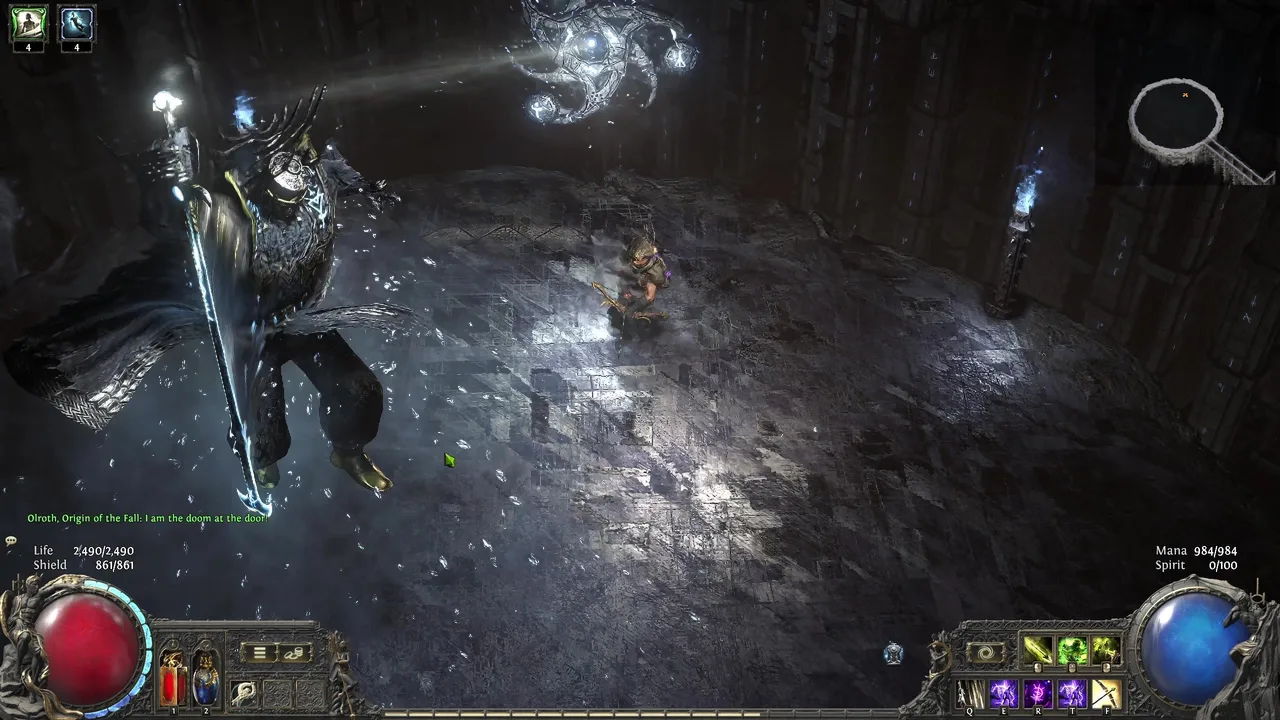 BossesOlroth, Origin of the Fall Boss Guide: Expedition Logbook Access, Triskelion Flame and Fake-Out RevivePath of Exile 2 Expedition pinnacle boss guide: how to find Olroth in level 79+ Logbooks, the Triskelion Flame, the false death at 0% HP, skeleton Remnant impact, and guaranteed uniques.coldendgamemulti-phase
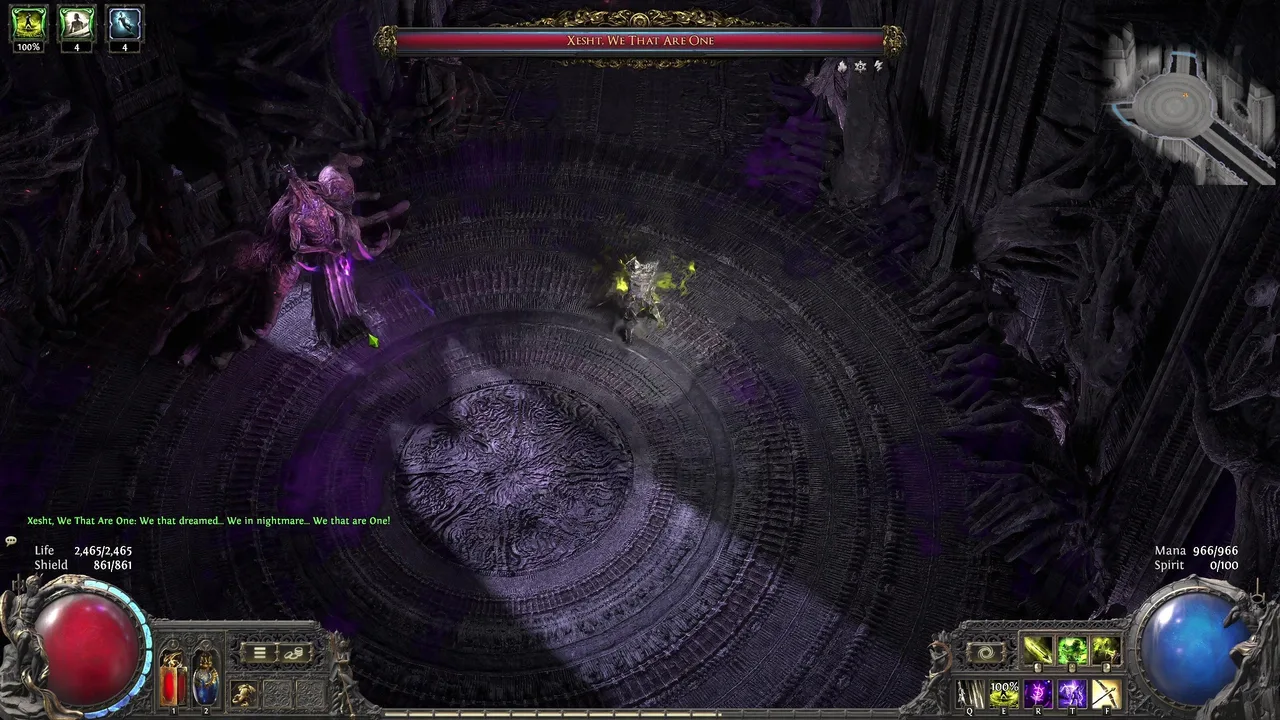 BossesXesht, We That Are One Boss Guide: Breach Pinnacle Phases, Hand Slams and Tul/Esh MechanicsPath of Exile 2 Breach pinnacle boss guide: Twisted Domain access, 50/100/150 splinter tiers, Finger Gun, Triple Blast, Falling Hands, and how to survive the Tul + Esh overlap.chaoscoldendgame
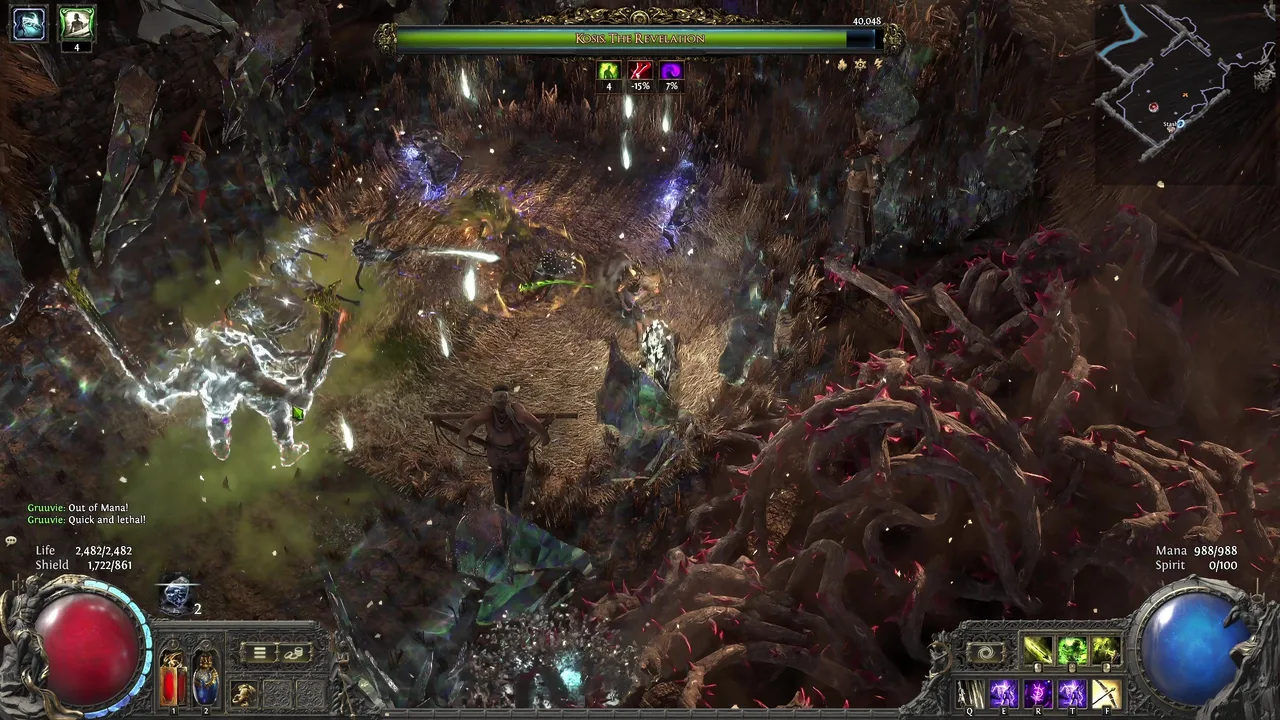 BossesKosis, the Revelation Boss Guide: Simulacrum Waves, Demon Beam, Shield and Boss+Add PriorityPath of Exile 2 Delirium / Simulacrum boss guide: where Kosis appears, wave context, Demon Beam direction, shield/recovery, priority vs Omniphobia, and reward/exit judgement.chaosendgamephysicalItemsExpedition Logbooks: Ocean Biome Reveal, Grand Expeditions and Where to Use ThemAn Expedition Logbook consumes on use to reveal an Ocean Biome section on the Atlas, each containing a Grand Expedition plus regular Expedition encounters. Current 0.5 logbooks come from Runic Monsters (Tier 10+ maps) and from Styrn, Fallen Knight of Aldur (guaranteed since 0.5.3). This guide covers where the reveal button appears, prerequisites, and what the old single-map Logbook flow used to be.expeditionendgame-accesslogbook
 ItemsBreachstones: Splinters, Revelatory Wombgift, Genesis Tree and Atlas Use in 0.5In Path of Exile 2 0.5, 300 Breach Splinters auto-combine into a Revelatory Wombgift, which you birth into a Breachstone at the Genesis Tree (spending Hiveblood). A Breachstone is then carried in your inventory and used on a surfaced Atlas node to reveal a Breach Domain / Stronghold cluster - not in the old Realmgate. This guide covers the full current 0.5 access chain, eligibility, failure cost, and the historical 0.3/0.4 flow.endgame-accessbreachatlas
 ItemsSimulacrum: Splinters, the Item, and the 7-Wave Delirium Encounter in 0.5In Path of Exile 2 0.5, 300 Simulacrum Splinters auto-combine into an itemised Simulacrum (a currency item, not a Waystone). You then apply it to an Atlas map node at 100% or higher Deliriousness, inside your Delirium fog, turning that node into a Simulacrum of Delusion - a 7-wave encounter. This guide covers the current 0.5 flow, eligibility, between-wave shards, rewards, and the retired 15-wave / Realmgate version.endgame-accessdeliriumsimulacrum
 ItemsTablets Guide: Types, Uses, Towers and Map PlanningPrecursor Tablets juice the maps around a Waystone with extra content and rewards. This guide covers the tablet types, how many you can slot, what 'uses remaining' means, and how to plan Towers and overlapping tablets for SSF versus trade.tradewaystones-guide
 Patch NotesPath of Exile 2 0.5.0 — Return of the Ancients: New League, Runes of Aldur and Endgame Rework0.5.0 was the 0.5 series content update: a new League, Runes of Aldur systems, the Endgame rework, new Ascendancies, skills, items and systems. A returning-player entry, not a notes mirror.itemsleaguemajor-updates
Information is compiled from public web sources and in-game observations; some visuals are original editorial diagrams. External information and images remain the property of their authors or platforms; contact us for removal requests.